
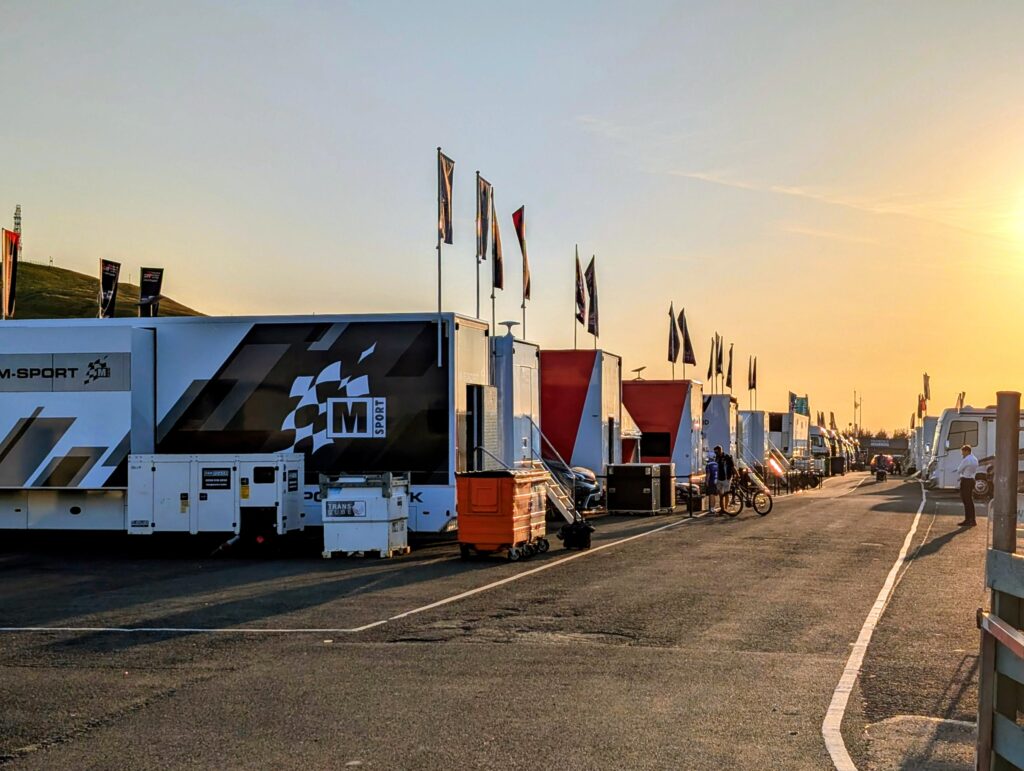
When you think about Formula One you imagine the cars, the racing, the drivers but there is something else that comes before all that and it is often overlooked. Not much is said about this part of the F1 circus but without it there would be no racing, no cars and the drivers would have nothing to do. What am I talking about I hear you ask?
I am referring to the dedicated team of people responsible for building and maintaining all that you see on the TV.
To get a car around the track you need to have an operational garage, a tyre store with mezzanine level and a hospitality suite of some kind, The later is not just for entertaining guests but provides the team with food and a place to recharge and the drivers with a place to relax, prepare for a race and get away from the crowds.
There is a lot of planning, preparation and hard work that goes into achieving this and the aim of this blog is to give you some insight into this part of Formula One. So lets start at the beginning.
Planning:
Before anything is done trackside there is a ton of planning that needs to be done first.
Often there is a dedicated person for this role but usually they work in cooperation with the ‘chief truckie’.
I will press pause on this for a moment and give a small history lesson.
Up until the late 90’s the truck drivers who drove all the equipment and cars to the circuit also had the responsibility of building and maintaining the garage. As garage design advanced and so to hospitality suites the demand on these truck drivers became too much. Laws on driving hours and working hours were tightened and it was no longer possible to do both sets of tasks. Now there are dedicated truck drivers and dedicated garage people. The official name is Garage Technician but within the paddock the term Truckie remains. The leader of this team could and probably does have a more official title but Chief Truckie is still used and sounds better than the alternative.
The planning phase takes several different items into consideration, the garage, the equipment and how it will travel to the circuit.
No two garages are the same and so the design of the garage needs to be created in advance in order to make sure that you can fit everything you need into the space provided. Circuits that have been on the calendar for a long time are well documented and experience helps to make the best design but if there is a new garage on the list then it is not unusual for someone to go and take a look in advance to see what they have to work with. They will take notes , measurements and dozens of photographs so they can come back to base and plan the design as accurately and efficiently as possible.
The garage has to fit two cars with a central island of some kind in the middle and around the edge work benches and tool boxes etc, This is usual a pretty standard design across all garages and once this is positioned within the space you can then see what you have to work with in terms of the rest. That can include the following. Front/Raer wing assembly station, gearbox assembly station, Radiator and hoses assembly station, fabrication area, engine supplier area, tyres area, engineering desks, IT and comms space, general spares area, consumables area, the all important coffee and drinks station plus something I have probably forgotten.
At the European races some of this is taken into the back of the trucks and the engineers and management have rooms above the tyres area outside., This is a fairly new development where the race trucks are used as a foundation to build a structure on top that holds office space and underneath a bespoke tyre storage area.
Building:
Up to a week in advance of a race specialist teams will come to the circuit and begin setting up the garage and for European races the team’s hospitality unit. At this time the paddock and pitlane is full of trucks, boxes, forklifts and people all busy in constructing the F1 circus. This is very much like a separate world from the actual race weekend with its own community that in some cases only meet before and after the race. This is something the cameras never show. Like a hidden world within formula one.
At the fly away venues the sea and air freight cases are loaded into the paddock and pitlane by a team of dedicated logistics drivers and all the preparation and packing done many months previous by the team back at base is unloaded. In this case everything you might need at the race has been pre planned and packed all the way down to the smallest details so the team and its personnel have everything they need to do their job but also to not have to go shopping for things in a foreign country. Time is precious during a race weekend and there is no time for shopping!
This part of the race weekend is just as important as getting the car to finish the race. There is just as much pressure to make sure everything is packed as during a race and the people that make sure the show goes around the world without a hitch deserve huge credit for the complexity and logistical management they do everyday is mind boggling,
Leave a Reply